


Table of Contents
Imagine stepping into a classroom where students are not just passive listeners but active participants, eagerly exploring concepts through hands-on experiences and collaborative projects. This vibrant scene is made possible by interactive learning materials, which have become essential tools for educators striving to engage and inspire their students.
Interactive learning transforms traditional education by inviting students to dive deeper into the material, fostering curiosity and creativity. When learners interact with content through simulations, quizzes, or group activities – they develop critical thinking skills and retain information more effectively. The benefits of this approach are profound: students not only grasp complex concepts more easily but also cultivate a love for learning that extends beyond the classroom.
In this blog, we will explore the importance of creating learning materials and how they can revolutionize your teaching methods. We will share practical tips for designing engaging content and highlight innovative tools that can help you bring your ideas to life.
Understanding Interactive Learning Materials
Interactive learning materials are educational resources designed to actively engage students in the learning process. These materials can include a variety of formats, such as text, images, audio, video, animations, and interactive activities like quizzes and self-assessments. They are typically structured to teach specific learning outcomes and can be utilized for self-study or as supplementary resources in traditional classroom settings.
The primary goal of interactive learning materials is to foster active participation among students, moving away from passive learning methods like lectures. By incorporating interactivity, these resources help enhance understanding and retention of information, as students are encouraged to explore concepts through hands-on experience and collaborative tasks.
Moreover, interactive learning materials can be delivered through various platforms, including AI based Learning Management Systems (LMS) like blackboards or online educational tools. They can serve as core components of a course or as prerequisites for more advanced activities, thereby enriching the overall educational experience. As technology continues to evolve, the integration of interactive elements in education is becoming increasingly common, reflecting a shift towards more engaging and effective teaching methodologies.
Types of Interactive Learning Material
Interactive learning materials encompass a variety of tools and formats designed to engage students actively in the educational process. Here are some key types:


- Quizzes: Quizzes serve as immediate feedback mechanisms, allowing students to assess their understanding of the material. They can be integrated into lessons through platforms like Kahoot! Or Google Forms, enabling real-time responses and discussions based on results. This not only reinforces learning but also encourages healthy competition among peers.
- Games: Game-based learning transforms educational content into engaging experiences. Examples include role-playing games, simulations, and educational video games that immerse students in scenarios requiring critical thinking and problem-solving skills. These interactive formats make learning enjoyable and can significantly enhance motivation and retention.
- Multimedia Presentations: Incorporating videos, animations, and interactive slideshows into lessons can capture students’ attention and cater to various learning styles. Tools like Genially and Prezi allow educators to create dynamic presentations that include clickable elements, embedded quizzes, and multimedia content, facilitating or richer learning experience.
- Collaborative Projects: Group activities that require collaboration foster communication skills and teamwork. Platforms like Google Workspace enable students to work together on shared documents or presentations, promoting peer learning and engagement.
- Interactive Whiteboards: These tools facilitate dynamic lessons where educators can draw, display multimedia content, and invite student participation in real-time. They enhance interactivity by allowing students to contribute directly to the lesson.
By utilizing these diverse types of interactive materials, educators can create a more engaging and effective learning environment that encourages active participation and a deeper understanding of the subject matter.
Benefits of Interactive Learning Materials

Enhances Engagement
Interactive learning materials are specially designed to captivate students’ attention by actively involving them in the learning process. Here are several key aspects that highlight how interactivity enhances engagement.

Active participation
- Direct Involvement: Unlike traditional methods that often rely on passive listening interactive resources – such as quizzes, games, and multimedia presentations – encourage students to participate directly
Variety of Engagement: this participation can take many forms, including:
- Answering questions in real-time.
- Collaborating with peers in group activities
- Manipulating digital content through interactive simulations.
Improved Retention
- Deeper Understanding: Research shows that when students are actively engaged, they are more likely to retain information and develop a deeper understanding of the subject matter.
- Instant Feedback: Interactive material often provides immediate feedback, allowing students to assess their understanding and adjust their learning strategies accordingly.
Gamification Elements
- Motivation Boost: The use of gamification elements, such as points, badges, and leaderboards, further enhances motivation and excitement.
- Learning as Play: These elements make learning feel more like a game than a chore, fostering a positive attitude towards education.
Breaking Monotony
- Dynamic Classroom Environment: Interactive materials can break the monotony of conventional teaching methods, keeping students interested and focused.
- Exploration and Discovery: By fostering a dynamic classroom environment where students can explore concepts hands-on, educators can significantly improve overall engagement levels.
Promotes Active Learning
Interactive learning materials play a crucial role in promoting active learning by encouraging students to engage directly with the content rather than passively absorbing information. Here are some key elements that illustrate how these materials foster active learning:
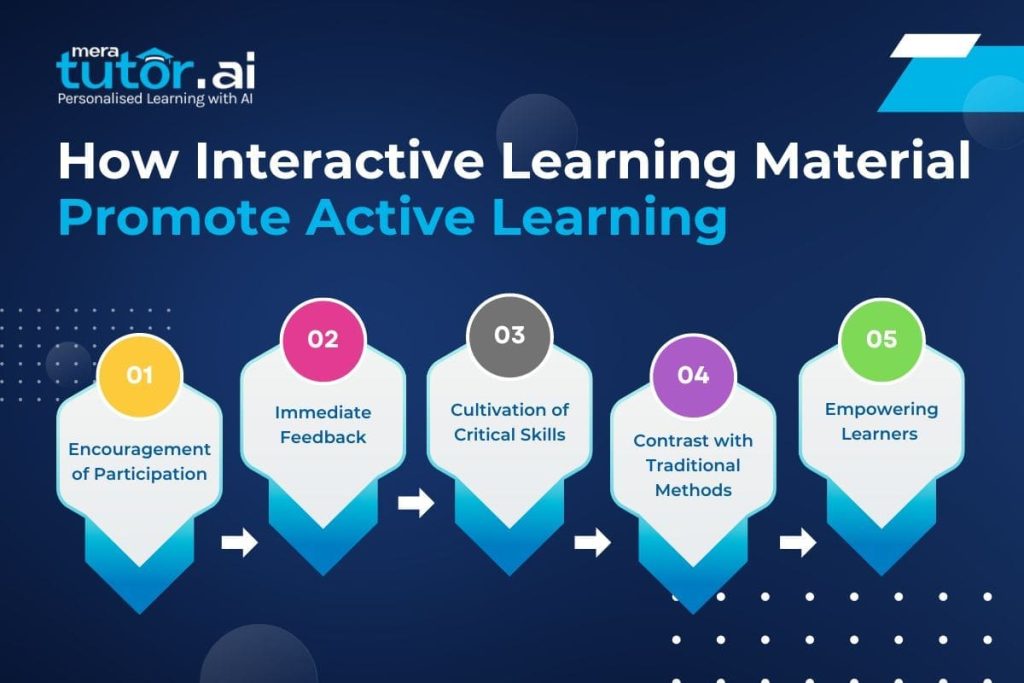
Encouragement of Participation
- Engagement with Content: Interactive resources, such as simulations and collaborative projects, compel students to actively think about the material.
- Critical Thinking Development: This engagement encourages learners to ask questions, explore various solutions, and apply their knowledge in real-world contexts.
Immediate Feedback
- Interactive Quizzes: These tools not only test knowledge but also provide instant feedback, allowing students to reflect on their understanding immediately.
- Self-Assessment Opportunities: Instant feedback helps students identify areas for improvement and adjust their learning strategies accordingly.
Cultivation of Critical Skills
- Analytical Thinking: Active participation cultivates critical thinking skills as students analyze information and make informed decisions.
- Collaboration: Working with peers on problem-solving tasks enhances communication and teamwork abilities, essential skills for future success.
Contrast with Traditional Methods
- Beyond Rote Memorization: This active learning approach contrasts sharply with traditional rote memorization techniques, which often lead to superficial understanding.
- Deeper Learning Experience: By focusing on engagement through interactive materials, educators can create a more profound learning experience that resonates with students.
Empowering Learners
- Ownership of Learning: Prioritizing active engagement empowers students to take ownership of their learning journey.
- Skill Development: This method not only enhances academic performance but also helps develop essential skills that extend beyond the classroom.
By integrating interactive learning materials into their teaching strategies, educators can create an enriching environment that fosters active learning and prepares students for future challenges.
Facilitates Differentiation
Interactive learning materials are instrumental in facilitating differentiation within diverse classrooms. They empower educators to tailor content and activities to meet the varied needs of students with different learning styles and abilities. Here are some key aspects of how interactive materials promote differentiation:

Tailored Content
- Variety of Formats: Interactive resources can cater to different preferences by offering multiple formats for the same content. For example:
- Videos or infographics for visual learners.
- Simulations or experiments for kinesthetic learners.
- Group discussions or podcasts for auditory learners.
Adjusting Complexity
- Skill Level Adaptation: Educators can modify the complexity of tasks within interactive materials to suit individual skill levels. This ensures that:
- Each student is appropriately challenged without feeling overwhelmed.
- Tasks can be scaffolded to gradually increase in difficulty, allowing students to build confidence as they progress.
Promoting Inclusivity
- Engagement for All: By providing diverse learning opportunities, interactive materials promote inclusivity, ensuring that all students can engage with the content in a way that resonates with them.
- Building Confidence: This adaptability helps build confidence among learners, as they engage with materials that highlight their unique strengths and interests.
Creating an Equitable Environment
- Equal Opportunities for Success: By leveraging interactive materials for differentiation, teachers can create a more equitable learning environment where all students have the opportunity to succeed.
- Fostering Growth Mindset: This approach encourages a growth mindset, as students learn to appreciate their individual learning journeys and recognize their potential.
By integrating interactive learning materials into their teaching strategies, educators can effectively address the diverse needs of their students, fostering a more inclusive and supportive classroom atmosphere.
Tips for Creating Interactive Learning Materials
Know Your Audience
Understanding the needs and preferences of your students is crucial for creating effective interactive learning materials. By assessing their learning styles, interests, and backgrounds, educators can tailor content that resonates with them. For instance, visual learners may benefit from infographics and videos, while kinesthetic learners might prefer hands-on activities.
Surveys or informal discussions can help gauge students’ preferences enabling educators to design materials that engage all learners. This personalized approach not only increases motivation but also enhances the overall learning experience, making students feel valued and understood.
Set Clear Learning Objectives
Defining clear learning objectives is essential for guiding the educational process. These objectives should articulate what students are expected to achieve by the end of a lesson or unit. Utilizing the SMART criteria- specific, Measurable, Achievable, Relevant, and Timebound- can help in crafting effective objectives.
Clear objectives provide direction for both educators and students, ensuring that everyone understands the goals of the learning experience. This clarity helps maintain focus and allows for better assessment of student progress, ultimately enhancing learning outcomes.
Incorporate Multimedia Elements
Using multimedia elements such as videos, images, and audio can significantly enhance interactive learning materials. These diverse formats cater to various learning styles and keep students engaged by breaking up traditional text-heavy content. For example, a video demonstration can clarify complex concepts more effectively than written explanations alone.
Additionally, incorporating audio clips or podcasts can provide alternative perspectives on a topic. By blending different media types, educators can create a rich, immersive learning environment that captivates students and reinforces key concepts.
Utilize Gamification
Introducing game-like elements into educational materials can make learning more enjoyable and motivating for students. Gamification techniques – such as points, badges, leaderboards, and challenges- encourage friendly competition and foster a sense of achievement.
By transforming lessons into interactive games or quizzes, educators can stimulate engagement and participation. This approach not only makes learning fun but also helps reinforce concepts through repetition in a low-stakes environment. Gamification promotes intrinsic motivation by allowing students to take ownership of their learning journey while developing critical skills.
Encourage Collaboration
Designing activities that promote teamwork, and communication is vital for fostering a collaborative learning environment. Interactive materials should include group projects, discussions, or peer reviews that encourage students to work together towards common goals. Such collaboration not only enhances social skills but also allows learners to share diverse perspectives and ideas.
By facilitating collaborative tasks through online platforms or in-person activities, educators can create a supportive atmosphere where students feel comfortable expressing their thoughts and engaging with their peers. This teamwork builds a sense of community within the classroom and enriches the overall learning experience.
Tools for Creating Interactive Learning Materials
Online Quiz Makers
Online quiz makers are innovative tools designed to streamline the process of creating, administering, and scoring quizzes. These platforms cater to both basic and advanced needs, allowing educators and trainers to develop engaging assessments efficiently.
Key Features
- User-Friendly Interface: Most online quiz makers offer intuitive interfaces that simplify quiz creation, enabling users to design quizzes without extensive technical knowledge.
- Variety of Question Types: Users can create diverse question formats, including multiple-choice, true/false, fill-in-the-blank, and more, accommodating different learning styles.
- Customization Options: Many tools allow for the customization of themes, templates, and multimedia elements like images and videos to enhance the learning experience.
Benefits
- Instant Feedback: Participants receive immediate results upon quiz completion, facilitating quick learning adjustments.
- Data Analysis: Comprehensive reporting features provide insights into participant performance, helping educators identify areas for improvement.
- Accessibility: Quizzes can be taken on various devices, ensuring flexibility for users in different environments.
Overall, online quiz makers represent a modern solution for educators seeking to create interactive and effective assessments that engage learners while simplifying the evaluation process.
Example: Kahoot, Quizlet, or Google Forms.
Presentation Software
Presentation software is a digital tool designed to create, manage, and display visual presentations. These applications are essential for educators, business professionals, and anyone needing to convey information effectively.
Key Features
- User-Friendly Design: Most presentation software offers intuitive interfaces that simplify the creation process, allowing users to focus on content rather than technical details.
- Customizable Templates: Users can choose from a variety of pre-designed templates that can be tailored to fit specific branding or presentation needs, ensuring a polished look.
- Multimedia Integration: These tools support the incorporation of various media types, including images, videos, and audio, making presentations more dynamic and engaging.
Benefits
- Collaboration Tools: Many platforms facilitate real-time collaboration, allowing multiple users to work on a presentation simultaneously, enhancing teamwork.
- Accessibility: Cloud-based options enable users to access their presentations from anywhere, promoting flexibility and convenience.
- Analytics and Feedback: Some advanced software includes analytics features that track viewer engagement, providing valuable insights for future improvements.
Overall, presentation software enhances communication by enabling users to create visually appealing and interactive presentations that effectively convey their messages.
Example: Prezi and Google Slides.
Interactive Whiteboards
Interactive whiteboards (IWBs) are advanced display tools that combine the functionality of traditional whiteboards with modern technology, enabling dynamic interaction in educational and professional settings.
Key Features
- Touch Interaction: IWBs allow users to interact with displayed content through touch gestures or specialized pens, enabling real-time engagement during presentations or lessons.
- Multimedia Capabilities: These boards support various media formats, including videos, images, and interactive applications, making it easier to create engaging and informative presentations.
Benefits
- Enhanced Collaboration: IWBs facilitate group activities by allowing multiple users to interact simultaneously, promoting teamwork and collective problem-solving.
- Integration with Digital Tools: They can connect to the internet and integrate with software applications, enabling educators and professionals to access a wealth of resources directly from the board.
Overall, interactive whiteboards serve as powerful tools that bridge the gap between traditional teaching methods and modern technology, fostering an engaging learning environment.
Example: Jamboard and Miro.
Content Creation Tools
Content creation tools are essential software programs, applications, and platforms that streamline the process of generating various types of digital content. These tools empower creators to efficiently produce high-quality materials, whether for blogs, social media, videos, or other formats.
Key Features
- Diverse Functionality: Content creation tools encompass a wide range of functionalities, including writing assistance, graphic design, video editing, and project management. This diversity allows creators to handle multiple aspects of content production within a single ecosystem.
- User-Friendly Interfaces: Many tools are designed with intuitive interfaces that simplify the creation process, making them accessible even to those with limited technical skills.
Benefits
- Increased Efficiency: By automating repetitive tasks and providing templates, these tools save time and enhance productivity. Creators can focus on the creative aspects rather than getting bogged down by technical details.
- Enhanced Collaboration: Many content creation tools offer collaborative features that allow teams to work together in real-time, facilitating better communication and idea sharing.
Overall, content creation tools are invaluable assets for anyone looking to enhance their creative output while maintaining efficiency and quality in their work.
Example: Content creation using Meratutor.ai
Best Practices for Implementing Interactive Learning Material
Test Your Materials
Before fully implementing interactive learning materials, it’s crucial for educators to pilot them in a controlled setting. Testing allows teachers to assess the effectiveness of the materials and identify any potential issues that may arise during actual use. By conducting a trial run with a small group of students, educators can observe how well the materials engage learners and facilitate understanding.
This preliminary phase also provides an opportunity to make necessary adjustments based on real-time observations. Ultimately, testing ensures that the final product is well-structured, user-friendly, and aligned with learning objectives, leading to a more successful implementation.
Gather Feedback
Collecting student feedback is essential for improving interactive learning materials. After using the materials, educators should encourage students to share their thoughts on what worked well and what could be enhanced. This feedback can be gathered through surveys, discussions, or informal check-ins, providing valuable insights into the student’s experiences.
Understanding their perspectives helps educators identify areas for improvement in this process, fosters a sense of ownership over their learning journey, and encourages them to engage more deeply with the materials.
Iterate and Improve
Continuous refinement of interactive content is vital to maintaining its effectiveness and relevance. After gathering feedback and analyzing student performance, educators should be prepared to make iterative changes to their materials. This process involves regularly reviewing and updating content based on new educational research, technological advancements, or shifts in student needs and preferences.
By embracing an iterative mindset, educators can ensure that their interactive materials remain engaging and effective over time. This commitment to improvement not only enhances the learning experience but also demonstrates to students the importance of adaptability and lifelong learning in their educational journey.
Conclusion
Creating interactive learning materials is more than just enhancing the learning experience—it’s about transforming how students engage with knowledge. By incorporating innovative tools and techniques, educators can turn passive learners into active participants, fostering deeper understanding and retention. With a mix of creativity, technology, and purposeful design, you can revolutionize your teaching approach and inspire students to embrace a lifelong love of learning. Embrace these interactive strategies today, and watch your classroom come to life.
Ready to create engaging, interactive learning materials for your students?
Try MeraTutor today! Our AI-powered tools make it easy to design quizzes, presentations, and multimedia content that captivate learners and enhance understanding. Empower your teaching with MeraTutor’s innovative platform—sign up now and transform your classroom experience!
Contact Us
1. What are interactive learning materials?
Interactive learning materials are educational resources that engage students actively, such as quizzes, games, and multimedia presentations, making the learning process more dynamic.
2. How do interactive tools improve student engagement?
They encourage active participation through activities like simulations and collaborative tasks, which makes learning more engaging and helps students retain information better.
3. What are some common tools for creating interactive learning materials?
Tools like Kahoot! Google Forms for quizzes, Prezi for multimedia presentations, and Jamboard for interactive whiteboards are popular for creating interactive content.
4. How can gamification enhance learning?
By incorporating points, badges, and leaderboards, gamification makes learning enjoyable and competitive, increasing motivation and participation among students.
5. Can interactive learning materials be used for all subjects?
Yes, interactive learning materials are versatile and can be adapted to any course, whether it’s math, science, literature, or history, providing an engaging way to teach all topics.